Original Art for sale | Pittura
Manu vb Tintoré
Spain
Visualizzazioni: 9
8000 € Aggiungi al carrello
Spedito da Sales de llierca, Spain
Costi spedizione:
Imballaggio con imballaggio in legno
Fai un’offerta
Spain
Visualizzazioni: 9
8000 € Aggiungi al carrello
Spedito da Sales de llierca, Spain
Costi spedizione:
Imballaggio con imballaggio in legno
Fai un’offerta
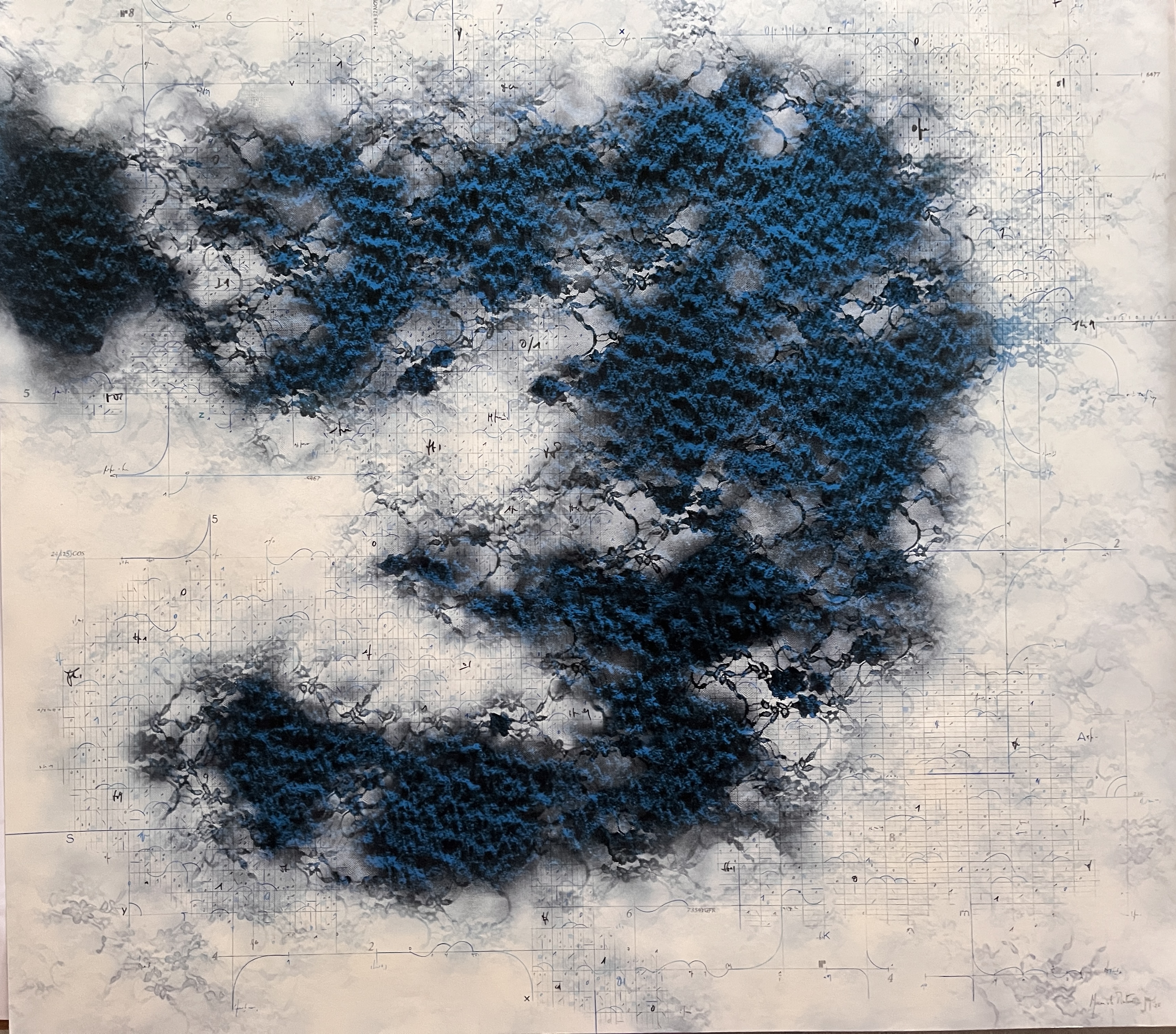
splash nº 9
enamel and pencil on paper on wood
cm 107x115
Prezzo 8000 €
enamel and pencil on paper on wood
cm 107x115
Prezzo 8000 €
Creative Process by Manu vb Tintoré
Stage One –Texture and Territory
The work begins on a high-quality, satin-finished 300 gsm paper.The artist applies successive layers of colored paint and black enamel using spatulas and sponges, creating a richly
textured base with a distinctly three-dimensional quality. This surface represents skin — a symbolic skin, a second skin that requires as much care as our own.The aim is not to depict
nature literally, but to evoke its essence: its ability to sprout, emerge, regenerate, and rise again.
In this first stage, the textured color spreads across the entire surface, evoking a sense of untouched territory.The idea is that nature is everywhere, and it is us who seek to go everywhere.
A subtle but essential shift that begins to reveal the underlying concept in the artist’s work.
Stage Two – Human Intervention
Faced with this natural space, the artist introduces a“principle of order,” echoing the way human’s structure, rationalize, and leave traces on the environment. To express this transition
between the organic and the artificial, the artist uses lace as both inspiration and stencil, applying spray paint to integrate geometric forms.These patterns signal the subtle yet powerful
presence of humanity within the composition.
Imagine the surface of a still pool, then think of David Hockney’s “Splash” paintings — the disruption caused by a body diving in. That moment of impact disturbs a system in balance,
triggering a slow process of recovery.The question is: for how long?
Stage Three – Contrast, Balance and Harmony
In the final stage, the artist heightens the dialogue between the vital and the geometric by introducing an “intimate grid,”a framework that brings structure to the canvas and guides the
viewer’s eye. This rational overlay does not erase the organic flow — it frames it, adding tension, contrast, and depth. In doing so, the expressive movement of the piece finds its final form,
revealing the complex coexistence — sometimes harmonious, sometimes in conflict — between the natural world and our impulse to control it.